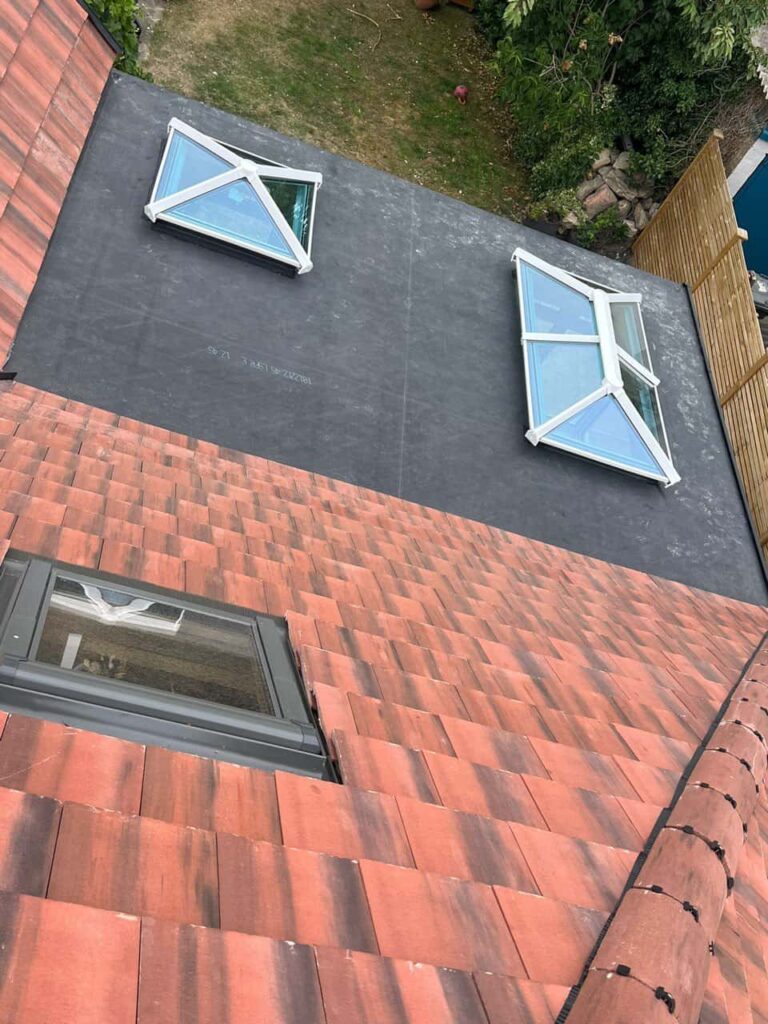
A roof that only seems to leak during or shortly after heavy rain can be difficult to understand. During lighter rainfall, everything may appear perfectly normal, yet prolonged or wind-driven rain can suddenly result in damp patches, dripping water or staining inside the property.
This does not necessarily mean the whole roof has failed. Heavy rainfall can expose relatively small weaknesses that are less noticeable during ordinary weather. A displaced tile, deteriorated flashing or vulnerable roof junction may cope with light rain but allow water to enter when a greater volume of water reaches the area.
For homeowners in Long Eaton, Nottingham, identifying the actual point of water entry is essential. Long Eaton Roofing Repairs can assess leaking roofs, determine whether the problem is localised or more widespread, and recommend suitable repair or roofing work based on the condition found.
Why Can Heavy Rain Reveal Roof Problems?
A roof is designed to direct rainfall away from the property, but this relies on its different components working together correctly.
During heavy rain, considerably more water moves across the roof covering. If there is a weakness somewhere in the system, the increased volume can expose it.
Wind can make matters more complicated by driving rain towards areas that would normally receive less direct water.
A Heavy-Rain Leak May Be Associated With:
- Slipped or broken tiles
- Cracked roofing materials
- Deteriorated lead flashing
- Vulnerable roof junctions
- Ridge or verge defects
- Problems around chimneys
- Deterioration beneath the roof covering
- Blocked or poorly performing rainwater routes
- More widespread ageing of the roof
The important point is that the location of the internal leak does not always reveal which of these problems is responsible.
1. Slipped or Displaced Roof Tiles
Roof tiles rely on correct positioning and overlap to shed water effectively.
When a tile slips out of place, part of the roof that should be protected can become exposed. The weakness may not produce obvious water ingress during every shower, but heavy rain can send enough water towards the affected area for a leak to develop.
Look Out For:
- Tiles that appear out of alignment
- Gaps within otherwise consistent rows
- Missing tiles
- Pieces of roofing material around the property
- Repeated dampness after rainfall
Where the surrounding roof remains sound, a displaced tile may represent a relatively localised repair.
2. Cracked or Broken Tiles
A tile does not necessarily need to be completely missing to cause trouble.
Cracks and breakages can provide routes through which water reaches the layers underneath. Heavy or persistent rainfall increases the amount of moisture passing over these defects.
One damaged tile does not automatically mean the roof needs replacing. However, widespread cracking or deterioration across numerous tiles may indicate that the overall condition deserves closer assessment.
3. Lead Flashing Has Deteriorated
Lead flashing is used around vulnerable roof details and junctions to help prevent water penetration.
If flashing has lifted, deteriorated or become defective, rainwater may find its way behind the surrounding roofing materials.
These problems can be particularly noticeable during heavy rain because a greater volume of water is flowing around the affected junction.
Flashing Problems May Occur Around:
- Chimneys
- Roof-to-wall junctions
- Changes in roof construction
- Other vulnerable roof details
Professional inspection is useful because flashing defects are not always easy to identify from ground level.
4. Wind-Driven Rain Is Entering a Vulnerable Area
Heavy rain is often accompanied by wind.
Instead of falling predominantly downwards, rain can be driven sideways and upwards towards roof details from unusual angles.
This may expose a weakness that remains unaffected during calmer conditions.
A homeowner may therefore notice that the roof leaks during one storm but remains dry during another period of rainfall. The difference can be the direction and intensity of the weather rather than the defect disappearing.
5. Ridge or Verge Areas Have Deteriorated
The ridge and verge areas form important parts of many pitched roofs.
If components become loose, damaged or deteriorated, the roof can become more vulnerable to weather penetration.
Heavy rain combined with strong winds may make defects in these exposed sections particularly noticeable.
The surrounding roofing should also be inspected because repairing only the most visible symptom may not resolve a wider issue.
6. Water Is Entering Around a Chimney
Chimneys introduce several junctions into a roof, making correct detailing particularly important.
Water appearing internally near a chimney does not automatically mean the chimney itself is the only issue. Flashing, surrounding tiles and adjoining roof details all need consideration.
Because water can travel after entering the roof, the visible damp patch may also appear some distance from the original entry point.
7. Water Is Travelling Before Becoming Visible Indoors
This is one of the main reasons roof leak diagnosis can be challenging.
Water entering through one part of the roof can travel along timbers, membranes or other surfaces before dripping somewhere else.
For example, the ceiling stain you notice may not sit directly beneath the damaged tile or flashing.
Professional Leak Investigation Looks Beyond the Damp Patch
A useful assessment considers:
- Where water is appearing internally.
- When the leak develops.
- Whether wind direction affects it.
- The roof covering above and around the area.
- Nearby junctions and flashing.
- Evidence of previous repairs.
- The overall condition of the surrounding roof.
This helps narrow down the genuine source of the problem.
8. The Roof Covering May Be Ageing More Generally
Sometimes a leak that appears during heavy rain is not caused by one isolated defect.
An older roof may have deterioration across several components, meaning the system as a whole is becoming less dependable.
Signs of Broader Deterioration Can Include:
- Multiple damaged tiles
- Frequent slipping or movement
- Leaks developing in different locations
- Numerous previous repairs
- Deterioration across several roof details
- Problems returning after local repairs
In these circumstances, a broader assessment is important before deciding whether another targeted repair remains appropriate.
9. Previous Roof Repairs May Need Attention
A previously repaired roof can continue performing effectively for many years, but older repairs should still form part of an inspection when new water ingress develops.
The current leak may be completely unrelated, or deterioration may have developed around a previously repaired section.
It is better to establish the cause than assume that an earlier repair has failed simply because the new leak appears nearby.
Why Does the Leak Sometimes Appear After the Rain Has Stopped?
Not every roof leak begins immediately.
Water may need time to travel through the roof construction before becoming visible inside the property.
During prolonged rainfall, moisture can accumulate around a vulnerable section and eventually find a route through.
This means dripping or dampness can sometimes appear after the heaviest rainfall has already passed.
The delay can make locating the source more difficult, but it does not make the leak less important.
What If the Ceiling Dries Afterwards?
A dry ceiling does not mean the roofing defect has repaired itself.
It simply means that the moisture has dried after the supply of rainwater stopped.
When similar weather conditions return, water may enter through the same defect again.
Repeated cycles of wetting and drying should therefore not be treated as a normal characteristic of an older roof.
Does a Heavy-Rain Leak Always Require a New Roof?
No. Many roof leaks can be repaired without replacing the complete roof.
If the problem is caused by one damaged tile, localised flashing deterioration or another isolated defect, targeted roof repairs may be entirely appropriate when the surrounding roof remains serviceable.
Repairs Are More Likely to Be Suitable When:
- The defect is clearly localised
- Most roofing materials remain sound
- Water ingress comes from one identifiable area
- There is no widespread deterioration
- Previous repairs remain stable
A professional assessment helps establish whether these conditions apply.
When Might a New Roof Need to Be Considered?
New or replacement roofing becomes more relevant when an inspection finds widespread deterioration rather than a single repairable defect.
For example, repeated leaks across different areas combined with extensive tile deterioration and multiple failing roof details may suggest that local repairs are no longer addressing the roof as a whole.
The decision should be based on condition rather than simply the presence of one leak or the age of the roof.
Why Quick Surface Patching May Not Solve the Problem
Stopping a visible gap without understanding how water is entering can result in the leak returning.
Effective roof repairs should address the cause.
If a tile has repeatedly moved, it is useful to understand why. If flashing has deteriorated, the complete affected detail should be assessed. If water is appearing away from the entry point, the route it is taking needs consideration.
This diagnostic approach is what gives professional roof repairs their value.
What Should You Do After Discovering a Leak?
If possible, take note of the circumstances surrounding the leak without attempting unsafe access to the roof.
Useful observations include:
- Where the water appeared
- Whether it dripped or created a damp patch
- How long the rain had been falling
- Whether strong winds were present
- Whether the problem has happened before
- Whether the affected area becomes wetter during prolonged rainfall
These details can be helpful when the roof is assessed.
Why Early Assessment Is Worthwhile
A small defect may initially allow only limited amounts of water into the roof.
If it remains unresolved, further periods of heavy rainfall can repeatedly expose surrounding materials to moisture.
Early inspection provides an opportunity to identify a localised problem before deterioration potentially becomes more extensive.
It also avoids relying on guesswork about whether the next spell of heavy rain will cause the leak to return.
Roof Leak Repairs in Long Eaton
At Long Eaton Roofing Repairs, we assess roof leaks throughout Long Eaton, Nottingham with attention given to both the visible symptoms and the possible external source.
Whether the problem involves slipped tiles, damaged roofing materials, flashing or more widespread deterioration, the aim is to establish what the roof actually requires before recommending the appropriate work.
Where a local repair is sufficient, serviceable areas of the existing roof can remain undisturbed. Where the roof is showing broader deterioration, its overall condition can be considered when determining the most suitable next step.
Conclusion
A roof leaking after heavy rain can have several possible causes, from a single slipped or cracked tile to deteriorated flashing, vulnerable roof junctions or more widespread ageing.
Heavy and wind-driven rain can expose defects that remain unnoticed during lighter weather, which is why some leaks seem to occur only during particular conditions. The point where water becomes visible indoors may also be some distance from where it originally entered the roof.
Importantly, one leak does not automatically mean that a new roof is required. Many problems remain suitable for targeted repairs when the surrounding roofing is in good condition.
If your roof in Long Eaton, Nottingham has started leaking during or after heavy rain, Long Eaton Roofing Repairs can assess the problem, identify the likely source and recommend an appropriate roofing solution based on the condition found.
Call us on: 0115 647 1193
Click here to find out more about Long Eaton Roofing Repairs
Click here to complete our contact form and see how we can help with your roofing needs.