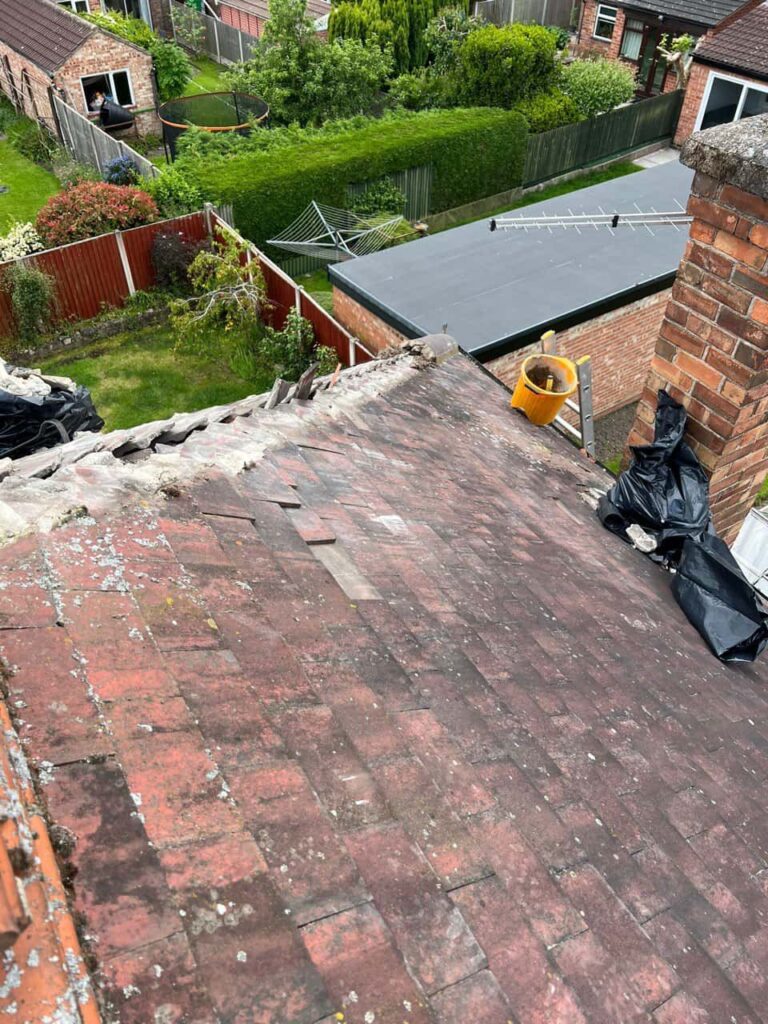
Finding the True Source of Water Entering Your Roof
A damp patch on a ceiling does not always reveal where a roof is leaking. Water can enter through one part of the roof, travel along the underlay or timber structure and become visible several metres away. This is why treating the area directly above an internal stain may fail to resolve the problem.
Finding the true source requires a methodical assessment of the roof covering, vulnerable junctions, drainage and internal roof space. Identifying the route taken by the water is essential if the repair is to address the cause rather than simply conceal the symptom.
Why Roof Leaks Can Be Difficult to Trace
Pitched roofs are designed to direct rainwater downwards, but water beneath the outer covering does not always follow a straight path. It may run along rafters, battens, underlay, fixings or pipework before dripping into the property.
The location of a damp patch can also change according to:
- The direction of the wind
- The intensity and duration of rainfall
- The amount of water entering
- The pitch and design of the roof
- The position of timbers beneath the covering
- Whether insulation is absorbing or redirecting moisture
A leak that appears only during wind-driven rain may have a different cause from one that develops after prolonged rainfall.
Start With the Internal Signs
Internal evidence can provide useful clues. The size, colour and position of a stain may indicate whether moisture is entering regularly or has appeared more recently.
Where it is safe to access the loft, look for:
- Darkened or damp roof timbers
- Wet or compressed insulation
- Watermarks on the underlay
- Moisture around nails or fixings
- Dampness near chimneys, vents or roof junctions
- Signs that water has tracked along a rafter
The highest visible point of dampness is often more useful than the lowest drip. However, the internal inspection should still be considered alongside the external condition of the roof.
Check the Roof Covering From Ground Level
Visible roof damage can sometimes be identified without accessing the roof. From a safe position, look for slipped, cracked or missing tiles, disturbed ridge tiles and uneven sections of the roofline.
Binoculars or a camera with a zoom function may help with an initial observation. Do not climb onto the roof, particularly during wet or windy conditions. A displaced tile or weakened roof section may be less stable than it appears.
Examine the Most Vulnerable Roof Details
Many leaks begin where different roofing materials or surfaces meet. These areas must remain watertight while accommodating normal movement and directing water away efficiently.
Common points requiring assessment include:
- Lead flashing around chimneys
- Roof valleys
- Ridges and verges
- Skylights and roof windows
- Vent pipes and other penetrations
- Connections between pitched and flat roofs
- Abutments where the roof meets a wall
- Gutters and drainage outlets
A small opening in one of these details may admit a surprising amount of water during particular weather conditions.
Could Blocked Drainage Be Responsible?
Not every roof leak begins with a broken tile. Blocked gutters, valleys or flat roof outlets can cause rainwater to collect and flow towards areas that are not designed to handle it.
Overflowing water may enter behind fascias, beneath roof edges or around deteriorated junctions. Signs of a drainage-related problem can include debris accumulation, staining below gutters, standing water or leakage that becomes more noticeable during heavy rain.
Clearing the blockage may be necessary, but the surrounding roof details should also be checked for damage caused by repeated saturation.
Is It Definitely a Roof Leak?
Condensation can sometimes resemble water ingress. It often develops when warm, moisture-laden air reaches a cold surface inside the roof space.
Condensation may be more likely when moisture is widespread, appears on cold mornings or forms on the underside of the roof covering without a clear external defect. By comparison, rainwater ingress often becomes noticeable during or shortly after rainfall.
The two problems can also occur together, so assumptions should not be made without inspecting ventilation, insulation and the external roof.
Why Repeated Patching May Not Work
Applying sealant or replacing one tile may appear to solve the problem temporarily. However, the leak can return if the true entry point was missed or if water is entering through several nearby defects.
Repeated leakage may indicate:
- Deterioration extending beyond one tile
- Failed flashing or roof junctions
- Damaged underlay
- Movement in previous repair areas
- More than one route of water entry
- A drainage problem affecting a wider section
A lasting repair depends on understanding how the roof components work together.
What a Professional Roof Inspection Should Establish
A professional inspection should locate the likely entry point, trace the route of moisture and assess whether the surrounding materials remain sound. It should also determine whether the problem is localised or part of broader roof deterioration.
For properties in Long Eaton, Nottingham, this evidence-led approach can prevent unnecessary work while ensuring that concealed defects are not overlooked. The purpose is to recommend a repair based on the actual condition of the roof rather than the position of the visible stain alone.
Conclusion
The source of a roof leak is not always directly above the damp area indoors. Water may travel along underlay, timbers or roof junctions before becoming visible, while blocked drainage and condensation can create similar symptoms.
If you have noticed dripping, ceiling stains or unexplained dampness, Long Eaton Roofing Repairs can carry out a thorough assessment and identify the most likely cause. Contact the team to arrange an inspection and determine the appropriate repair for your roof.
Call us on: 0115 647 1193
Click here to find out more about Long Eaton Roofing Repairs
Click here to complete our contact form and see how we can help with your roofing needs.